Digital workforce agents that act like colleagues, not chatbots.
AI Colleague deploys role-specific agents — Recruiter, Onboarding Specialist, Performance Coach — that reason, decide, and execute across your systems — within the guardrails and approval points you define.
What AI Colleague actually does.
A framework for deploying role-specific digital workforce agents, not a single generic chatbot.
Role-specific agents
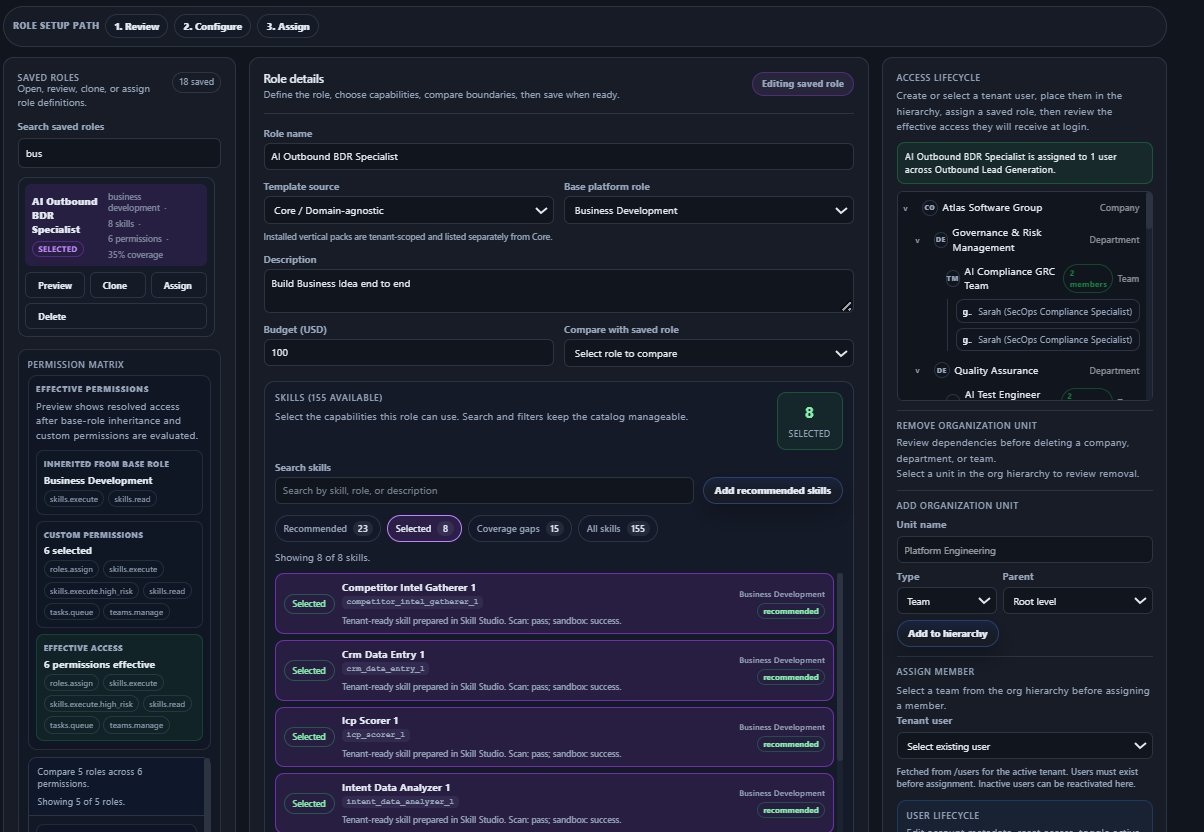
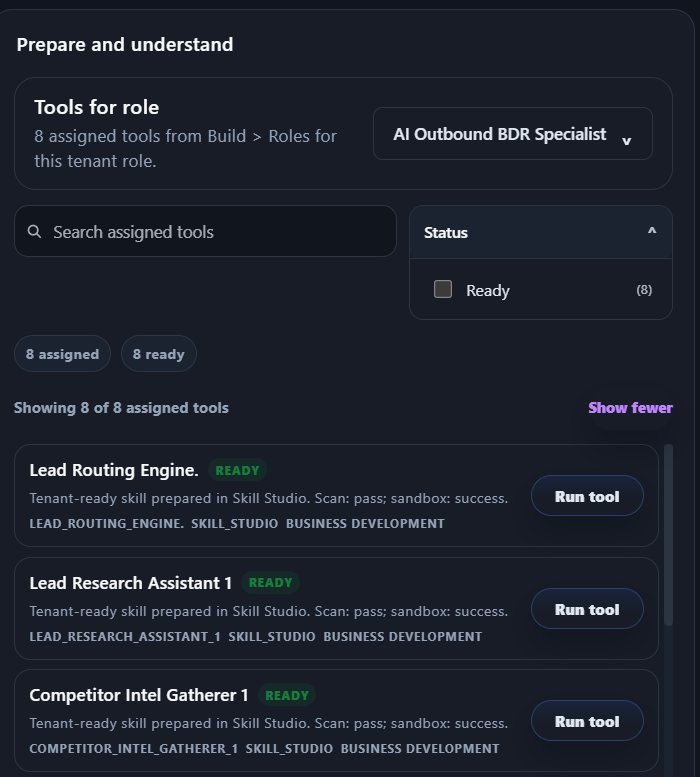
Recruiter, Onboarding Specialist, Performance Coach and more — each agent is purpose-built for a defined function, not a general-purpose assistant.
ClaudeBrain routing engine
A central reasoning and routing layer that lets agents make routine decisions and hand off work between roles within defined policies — escalating to people when a decision exceeds them.
Cross-system execution
Agents act directly inside your existing tools — HRMS, ATS, ticketing, communication platforms — instead of operating alongside them.
Human-in-the-loop guardrails
Every agent operates within defined escalation paths, built to extend judgment rather than replace it.
Built for accountable autonomy.
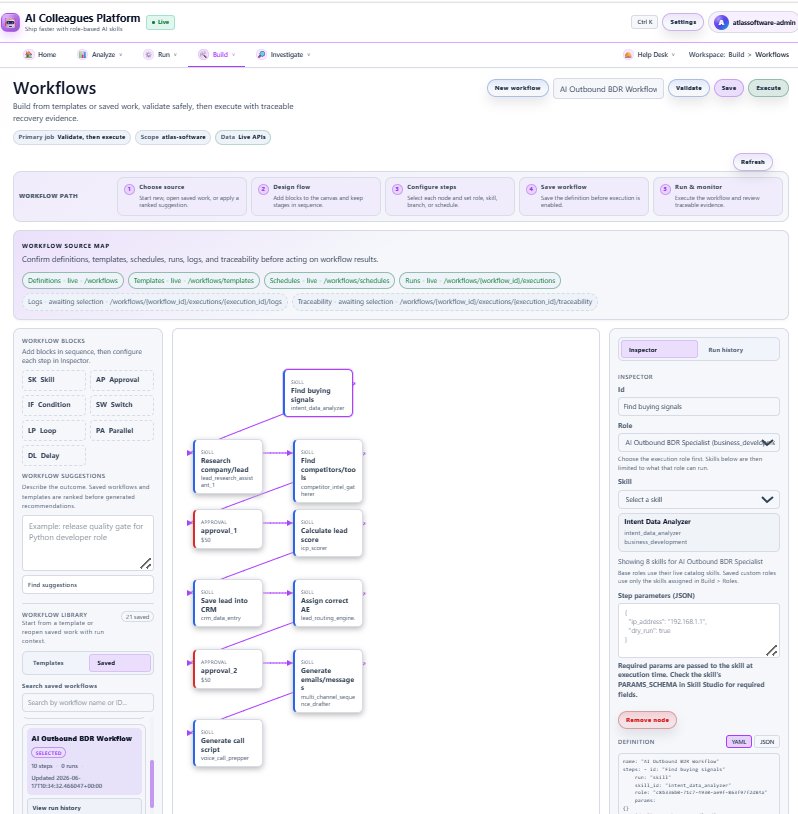
From request to resolution, with fewer handoffs.
Intake
A request or trigger enters the system — a new requisition, an onboarding date, a performance review cycle.
Reasoning
The ClaudeBrain routing engine determines which agent (or agents) should handle it, and what context they need.
Execution
The relevant AI Colleague agent acts directly inside your systems — drafting, scheduling, updating records, notifying stakeholders.
Escalation
Anything outside defined guardrails is routed to a human, with full context attached — no starting from scratch.
What runs automatically — and what needs a human.
Every AI Colleague role is configured with explicit permissions. This is the boundary between what agents do on their own and what they hand to a person.
Executes within policy
- Routine, reversible actions inside permitted systems (drafting, scheduling, record updates, notifications)
- Routing work between agents according to the role permission matrix
- Escalations with full context when a request falls outside policy
Requires a named approver
- Decisions with employment, financial or legal impact (e.g. offers, compensation, terminations)
- Actions outside an agent's assigned tools or permission matrix
- Any action flagged as high-risk in your policy configuration
Logged & owned
- Each agent has a defined role, permissions and escalation path
- Every decision and action is logged with its reasoning trace
- A named human owner is accountable for each agent role
Works alongside the rest of the stack.
See AI Colleague in action.
Tell us about your environment, systems and governance requirements — we'll set up a walkthrough scoped to your use case.